
South Beach Diet
July 5, 2026 · John Bergeron MD
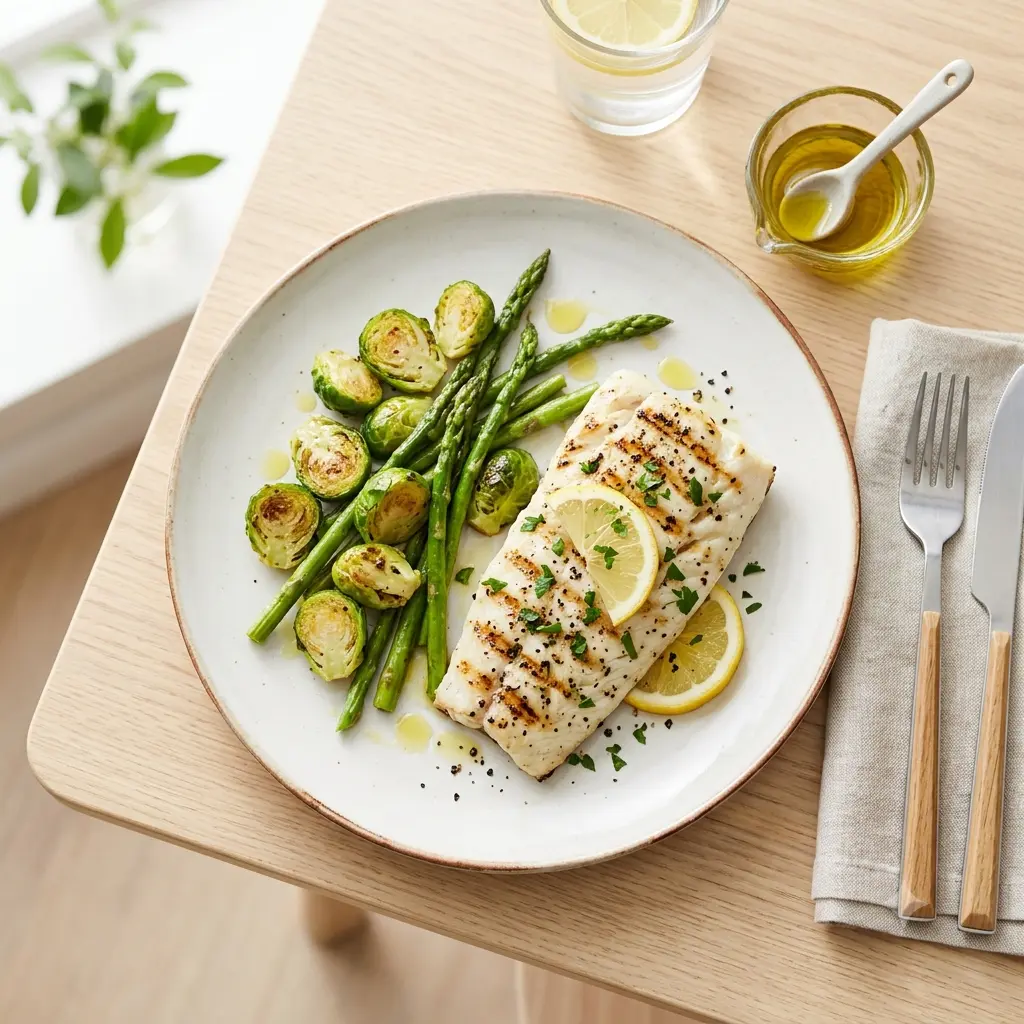
The South Beach Diet is a low-glycemic eating plan built around a simple sorting rule: not all carbs and fats are equal, so favor the good ones and limit the bad. Cardiologist Dr. Arthur Agatston designed it for heart health, and it became a household name after his best-selling book in 2003. It leans on more lean protein and fewer refined carbohydrates than a typical Western diet, and while it is no longer the cultural phenomenon it once was, its core principles have aged well.
Part of why it has aged well is that its central idea, keeping blood sugar steady, is exactly the lever modern medicine now pulls too. Now that GLP-1 medications are part of the weight loss picture, a low-glycemic diet like South Beach is less a competitor to medical treatment and more a natural partner to it. Below is how the diet works, the phase 1 and phase 2 food lists, an honest look at whether it works, and how it fits alongside GLP-1 therapy.
How the South Beach Diet works

The plan divides carbohydrates and fats into “good” and “bad.” Bad carbs are those high on the glycemic index, a measure of how quickly a food raises blood sugar. Fast spikes are followed by crashes, which drive hunger and cravings. Good carbs sit lower on the glycemic index, so they keep blood sugar steadier and keep you fuller longer. On the fats side, the diet steers away from saturated and trans fats toward healthier options like olive oil and avocado.
Like the Atkins Diet, South Beach runs in phases, but it uses three rather than four, and it is more flexible about which fats and proteins you choose. People hoping to lose ten pounds or less can start at phase 2.
Phase 1 (first two weeks). The most restrictive stage, designed to stabilize blood sugar and quiet cravings. You eat lean protein, vegetables, beans, eggs, low-fat dairy, and a small amount of healthy fat. You avoid sugar, fruit, fruit juice, starches, grains, and alcohol.
Phase 2. Good carbs come back gradually, including whole-grain bread, whole-wheat pasta, and brown rice, along with a few servings of fruit a day and, if you like, a glass of wine. This is the phase you stay in until you reach your goal, and it is the one most people search for, so it is worth knowing the food list well.
Phase 3 (maintenance). Less a phase than a way of eating for the long term. No food is strictly off-limits, but you carry the habits from phases 1 and 2 forward to hold your results.
What you can eat (and what to avoid)
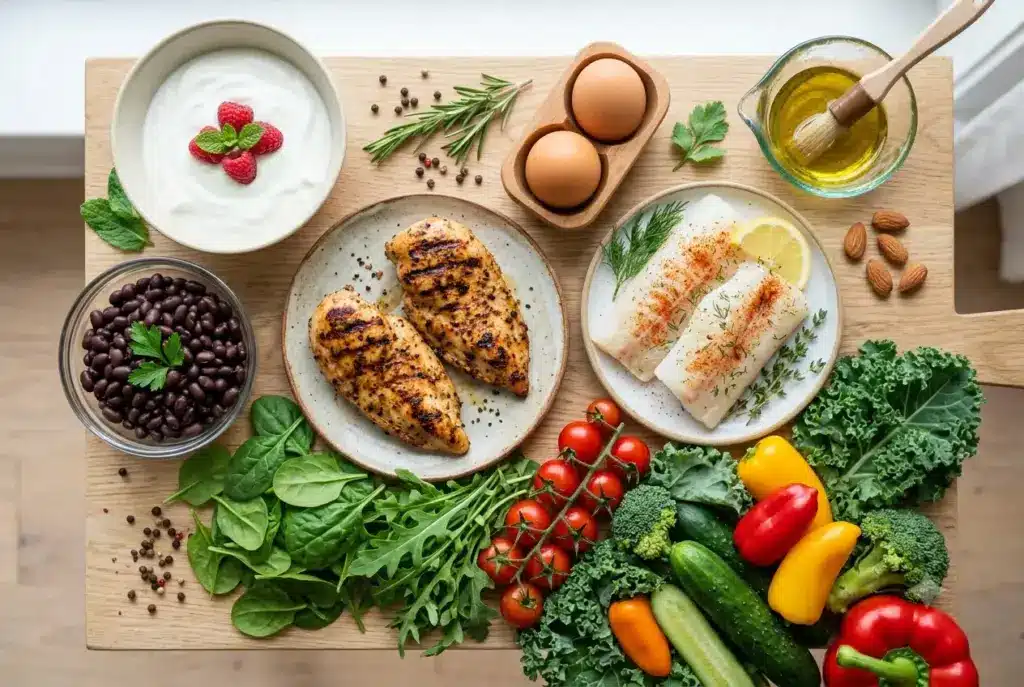
Foods you eat on South Beach
- Lean protein: chicken, turkey, fish, shellfish
- Low-fat dairy: cheese, milk, plain yogurt
- Vegetables and beans
- Eggs
- Healthy fats in small amounts: olive oil, avocado
- Good carbs in phase 2: whole-grain bread, whole-wheat pasta, brown rice, and fruit
Foods you limit or avoid, especially in phase 1
- Sugar and sweets
- Fruit and fruit juice (phase 1)
- Starches and refined grains
- Fatty meats like beef, ham, and duck
- Saturated and trans fats
- Alcohol (phase 1)
A sample day on the plan might look like a spinach omelet with a vegetable juice for breakfast, lentil soup with a side of lean protein for lunch, grilled fish with brussels sprouts and asparagus for dinner, and two snacks in between, such as plain Greek yogurt or cheese with fruit in phase 2. The plan actually encourages snacking twice a day, especially early on, to keep cravings from building.
Does the South Beach diet work? An honest look
South Beach works for a lot of people, with the same caveat that applies to nearly every diet.
What it does well. Because it targets blood sugar rather than just calories, it tends to reduce cravings and the energy crashes that derail eating plans. It is more balanced and less extreme than very-low-carb diets, it allows whole grains and fruit back in fairly quickly, and it is friendlier to vegetarians and to anyone who does not want to give up carbs entirely. The emphasis on lean protein, vegetables, and healthy fats is sound nutrition by almost any standard.
Where it falls short. Phase 1 is genuinely restrictive, and cutting fruit, grains, and alcohol for two weeks is harder in practice than on paper. Critics have called South Beach a fad diet, and the fair version of that criticism is not that the food is wrong but that any structured plan is only as good as your ability to stick with it. As with every diet, the weight tends to return when the habits stop.
That is the honest throughline: most diets do not fail because the science is wrong. They fail because willpower alone rarely holds against biology over the long term. That is exactly the gap medical weight loss is built to close.
South Beach and GLP-1 medications
Of all the popular diets, South Beach may be the most natural fit alongside GLP-1 therapy, because both are working on the same thing: steady blood sugar and steady appetite. GLP-1 medications, the class that includes semaglutide, tirzepatide, and liraglutide, work with your body’s own appetite signaling to reduce hunger and slow digestion. A low-glycemic plate reinforces that from the food side. Still, the combination should be handled with a provider rather than stacked on your own, for a few reasons.
Protein comes first. GLP-1 medications already cut appetite significantly. Pair that with a restrictive phase 1 and it becomes easy to eat too little overall, which risks losing muscle along with fat. Prioritizing adequate protein protects lean mass while you lose weight, and it is one of the first things we monitor.
Blood sugar needs watching. Both a low-glycemic diet and GLP-1 medications lower blood sugar. For anyone also taking medication for diabetes, that overlap can push blood sugar too low, so dosing and monitoring belong with your care team.
Ease into phase 1. The two-week phase 1 is designed to blunt cravings, but on a GLP-1 your appetite is already suppressed. That can mean skipped meals and low intake if you are not paying attention, so we often adjust how strictly phase 1 is applied when a medication is involved.
Supervised properly, the diet and the medication reinforce each other, one steadying blood sugar from the plate and the other from the appetite side. The reason we combine them under medical oversight rather than recommending you do it alone is simple: the same overlap that makes them effective is what makes them worth monitoring.
Is South Beach right for you?
South Beach is one of the more flexible plans out there, which makes it a reasonable fit for a lot of people, including vegetarians who would struggle with stricter low-carb diets. But whether you are drawn to South Beach, keto, or another approach, the diet is only one piece. What determines whether the weight stays off is having medical support that adapts the plan to your body over time.
At Houston Weight Loss Center, we have practiced metabolic medicine since 1996, and today that means pairing sound nutrition with GLP-1 therapy and physician oversight, not one or the other. If a low-glycemic approach appeals to you, or you are wondering how it fits with a GLP-1 medication, our team in Houston, Katy, and Webster can help you build a plan that is both effective and safe.
Related reading: Atkins Diet, Keto Diet, Low-Carb Diet, Mediterranean Diet, Glycemic Index, Protein and Weight Loss on GLP-1 Medications, and Why Muscle Preservation Matters on GLP-1s.