
Protein and Weight Loss: Why It Matters on GLP-1 Medications
July 4, 2026 · John Bergeron MD
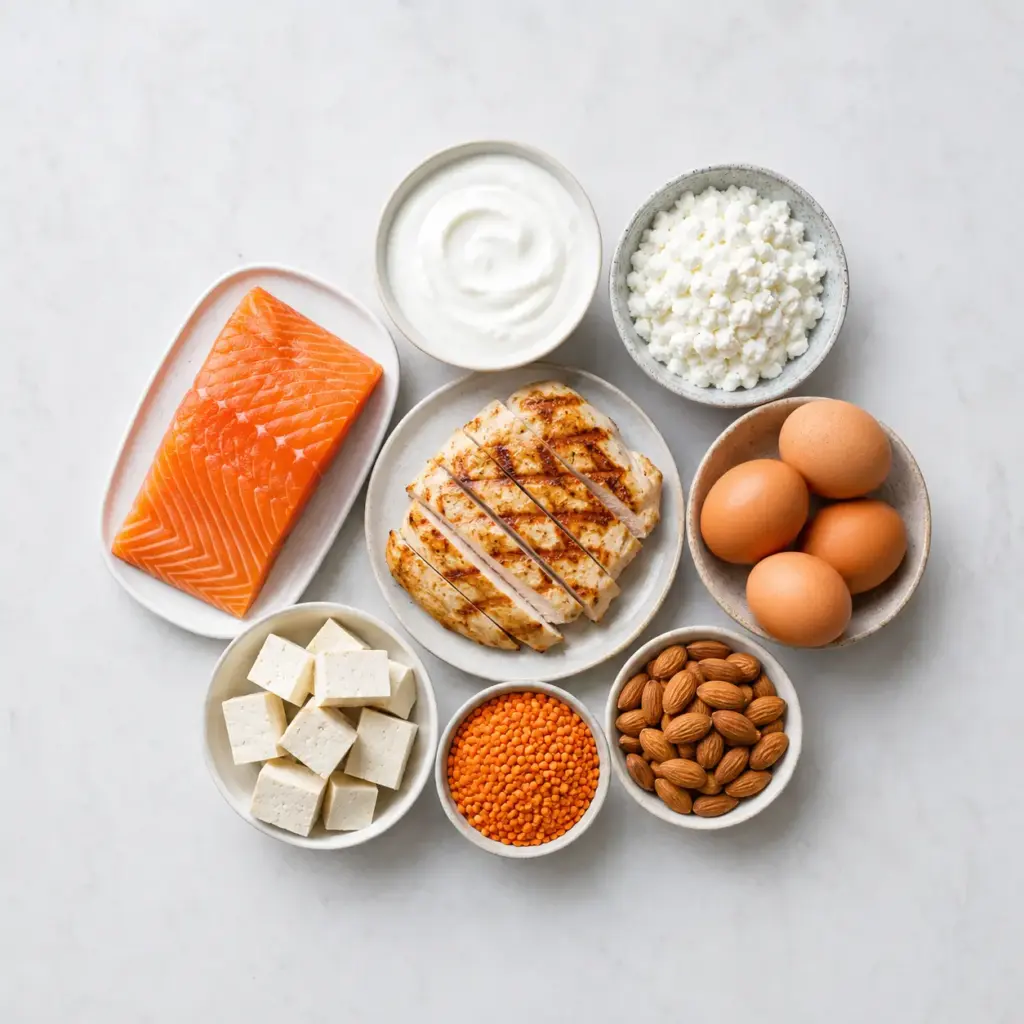
If there’s one nutrient that deserves your attention while you’re losing weight, it’s protein. Getting enough protein helps you hold on to muscle, stay full longer, and keep your metabolism working for you, and it matters even more if you’re losing weight with a GLP-1 medication like semaglutide or tirzepatide.
Why protein matters so much for weight loss
When you lose weight, you don’t only lose body fat. You also lose a little muscle along the way. That’s normal with any kind of weight loss. The goal of a healthy program is to make sure the weight you lose is mostly fat, while protecting the lean muscle that keeps you strong and healthy. Protein is your most powerful tool for doing exactly that.
Here’s what protein does for you during weight loss:
- Protects your muscle. Eating enough protein signals your body to preserve lean muscle instead of breaking it down for energy.
- Keeps you fuller, longer. Protein is the most filling nutrient, so it helps curb hunger and cravings and makes it easier to stick with your plan.
- Supports a healthy metabolism. Muscle burns more calories at rest than fat does, and your body even burns extra calories just digesting protein.
- Helps you feel and look your best. Protein supports healthy skin, hair, nails, immune function, and recovery.
Protein and GLP-1 medications (semaglutide and tirzepatide)
GLP-1 medications such as semaglutide and tirzepatide work largely by reducing your appetite. That’s exactly why they’re so effective, but it also means it’s easy to eat too little, and protein is often the first thing to fall short when you’re simply not as hungry.
Research on rapid weight loss, whether from dieting or from GLP-1 medications, shows that when protein and exercise are neglected, a meaningful share of the weight lost can come from muscle rather than fat. The encouraging news is that this is largely preventable. When patients prioritize protein and add some strength training, most of the weight lost is fat, and muscle can be preserved. The medication does the appetite work; your protein and activity protect your muscle.
Why protecting muscle matters
Muscle isn’t just about strength or appearance. It helps keep your metabolism up, supports balance and mobility, and protects your long-term health as you age. Losing weight while keeping your muscle is what makes your results feel good and last. The two things that protect it most are simple: enough protein and regular strength training.
How much protein do you need?
Everyone’s needs are a little different, but a common goal during weight loss is roughly 0.5 to 0.8 grams of protein per pound of body weight each day, often around 25 to 40 grams of protein per meal. Spreading protein across your meals, rather than eating it all at once, helps your body put it to use.
Your ideal target depends on your age, weight, activity level, and overall health, so the best number is the one your provider sets with you. If you have kidney disease or another medical condition, talk with your provider before significantly increasing your protein intake.
Great sources of protein
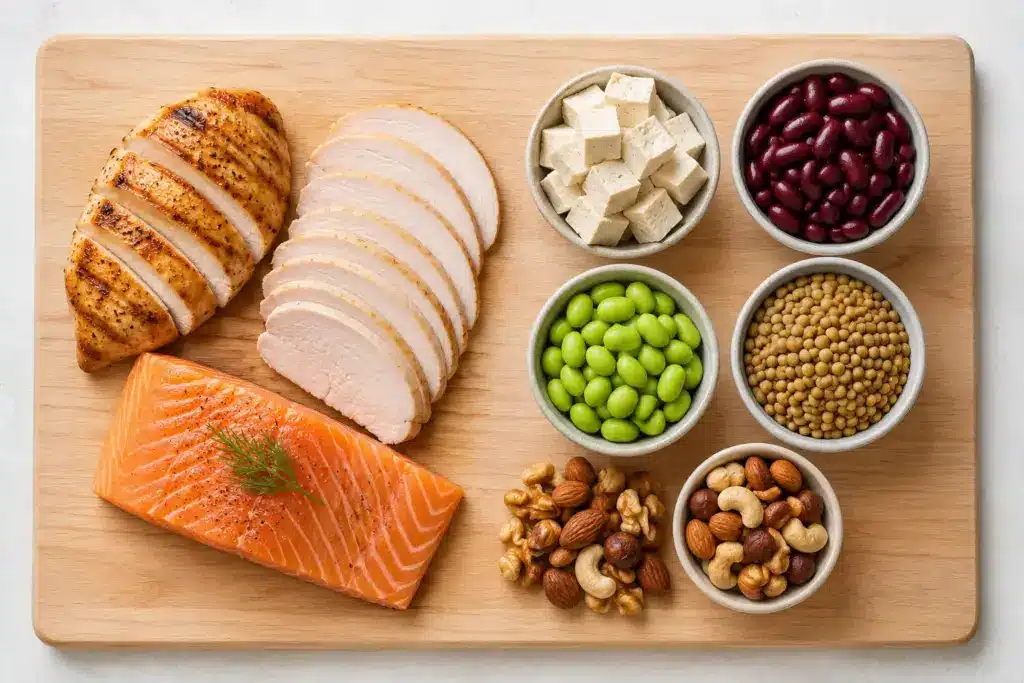
- Lean poultry: chicken and turkey breast
- Fish and seafood: salmon, tuna, shrimp, cod
- Eggs and egg whites
- Greek yogurt, cottage cheese, and low-fat dairy
- Lean beef and pork
- Beans, lentils, tofu, and edamame for plant-based options
- Protein shakes and powders, especially handy when your appetite is low on a GLP-1
Easy ways to hit your protein goal (even when you’re not hungry)
One of the most common challenges on a GLP-1 medication is simply not feeling hungry enough to eat much. Our guide on what to eat on GLP-1 medications goes deeper. These simple habits make it easier to get the protein your body needs:
- Eat your protein first at each meal, before filling up on other foods.
- Start your day with protein: eggs, Greek yogurt, or a protein shake.
- Keep easy options on hand: string cheese, hard-boiled eggs, jerky, or a ready-to-drink shake.
- Add protein to what you already eat: a scoop of protein powder in a smoothie, oatmeal, or coffee.
- Try smaller, more frequent meals if large plates feel like too much.
Pair protein with strength training
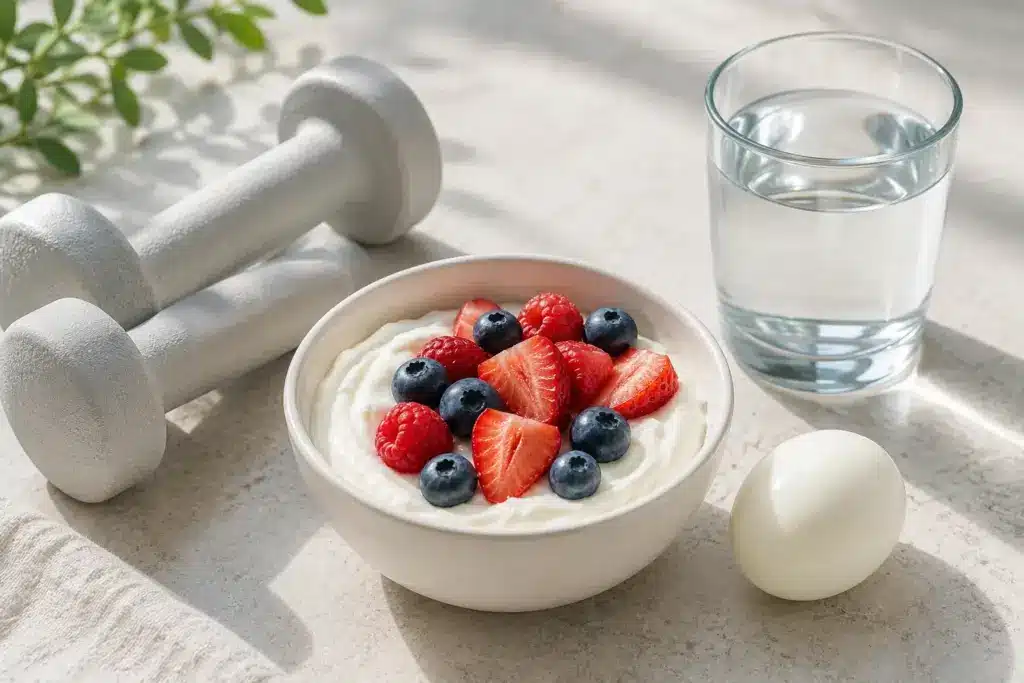
Protein gives your body the building blocks to keep muscle, and exercise, especially strength or resistance training a couple of times a week, gives it the reason to. Together, they’re the winning combination for losing fat while holding on to the muscle that keeps you strong.
How Houston Weight Loss Center can help
Our physician-supervised weight loss programs are built to help you lose fat while protecting your muscle. Whether you’re using a GLP-1 medication or another approach, we’ll help you build a realistic protein and nutrition plan that fits your life and your goals.
Call us today or schedule your consultation online to get started. With convenient locations across the greater Houston area, our team is dedicated to helping you lose weight the healthy way, and keep it off.
This page is for general education and isn’t a substitute for medical advice. Your protein and weight loss plan should be personalized by your healthcare provider.